Mass Killings and Mass Arrests of Mourners in Arsi Raise Global Alarms as the U.S. Demands Accountability
Addis Ababa / Debre Markos — A severe humanitarian and security crisis continues to unfold in the Oromia Region following a horrific massacre in the Arsi Zone, Shirka Wereda, where more than 45 Ethiopian Orthodox Tewahedo followers were brutally killed. The atrocity, which has sparked widespread public outrage and international concern, highlights a rapidly deteriorating security landscape for vulnerable civilians.
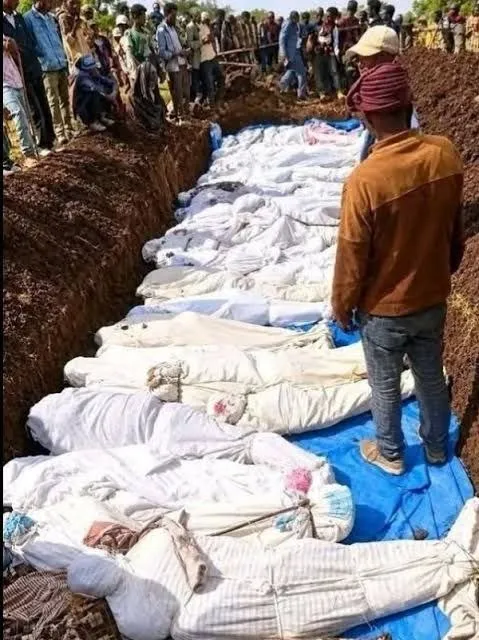
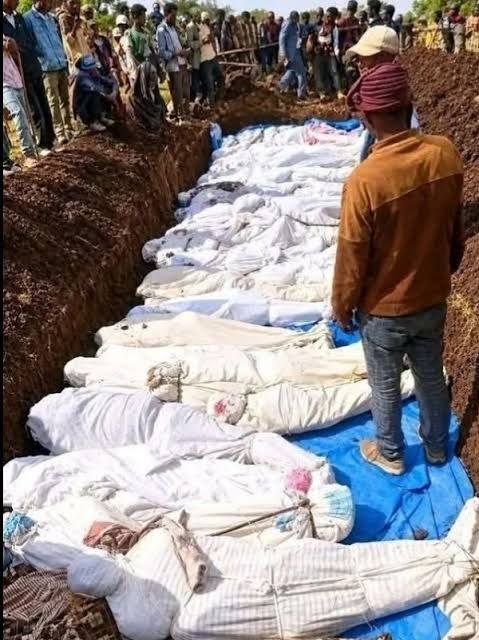
The Massacre and the Burial of 36 Victims
According to recent reports, the sheer scale of the violence became undeniably evident when the bodies of 36 victims were recovered from a single location and laid to rest in heartbreaking funeral services at the Chole St. Raphael and St. Michael Churches. Local residents, speaking under conditions of extreme fear and distress, expressed the grim reality of their daily existence: "Living in our physical bodies while simply awaiting our death has become unbearable; we live each day knowing they might return to kill us tomorrow."
Crackdown on Mourners and Arbitrary Mass Arrests
The tragedy did not end with the killings. According to local residents who reached out via phone, a ruthless crackdown was launched against anyone who participated in burying the victims, wore mourning clothes, or was related to the deceased. Local authorities have been hunting down and detaining individuals under the pretext of being "enemies' collaborators" and "leaking information."
While initial estimates from residents put the number of those arbitrarily detained at over 100, Addis Standard corroborated the crackdown, confirming that the number of detainees has already surpassed 50.
The Contrast: Institutional Silence and Public Outrage
The ongoing bloodshed in Arsi, compounded by concurrent violence, displacement, and property destruction in Moyale—where tens of thousands of Ethiopians have fled across the border into Kenya—has drawn stark criticism regarding the response of state authorities and media.
While international and Kenyan media outlets have actively reported on the plight of displaced refugees in Kenya, mainstream global media outlets have largely remained silent on the execution-style murder of over 36 faithful in a single location. Meanwhile, state media channels faced intense public backlash for opting to broadcast entertainment and festival programs rather than addressing the profound gravity of the crisis.
Criticism has also mounted against official attempts to downplay the government's primary duty of protection by attributing the massacres to superficial factors like "Tsimdo/Tsomdo" or localized pretexts. Observers note that such justifications severely erode public trust, as citizens demand concrete action rather than bureaucratic excuses.
The U.S. Department of State Condemns the Atrocities
Amid growing international pressure, the U.S. Department of State’s Bureau of African Affairs formally condemned the targeted killings of civilians in the Arsi Zone. In an official statement, the Bureau expressed deep alarm over the violence, emphasizing that attacks motivated by religion, ethnicity, or politics are entirely unacceptable and must cease immediately.
The Bureau urged all parties to refrain from actions that could further polarize or divide communities during this critical time. Crucially, the U.S. called upon the Ethiopian government to launch an immediate, thorough investigation to bring the perpetrators to justice and restore the rule of law.
The Path Forward
As families mourn and a growing number of community members languish behind bars for the "crime" of burying their dead, the fundamental question remains echoing across social and independent platforms: “How much longer must citizens endure such unspeakable suffering?”
The public demand is absolute: what is needed is not political maneuvering or defensive narratives, but immediate, transparent action to protect civilian lives, aid the displaced, and hold perpetrators fully accountable.